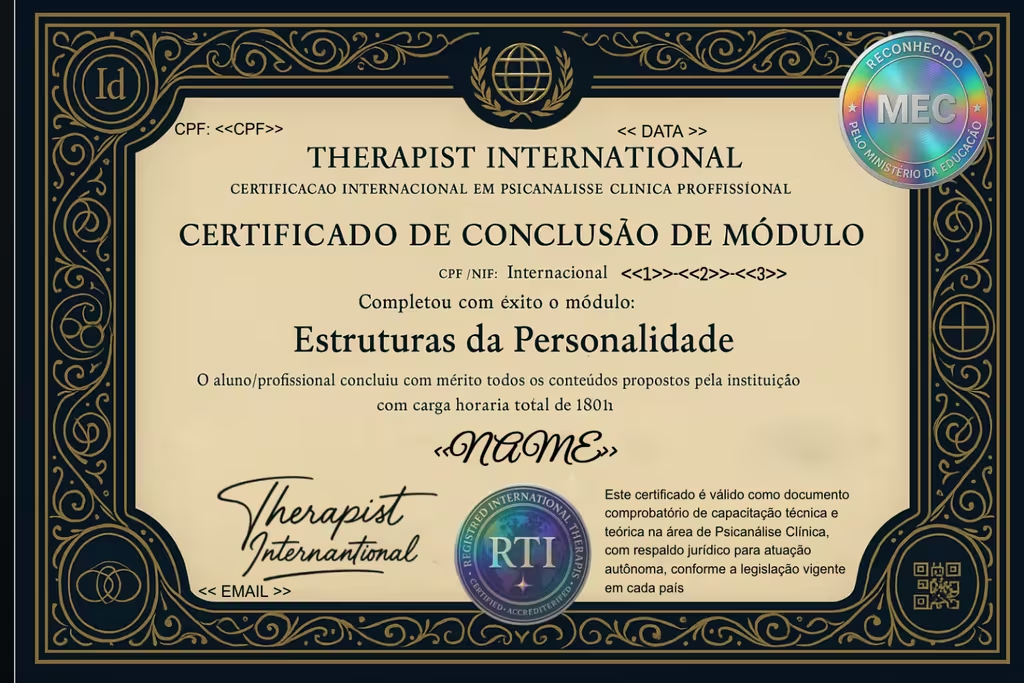
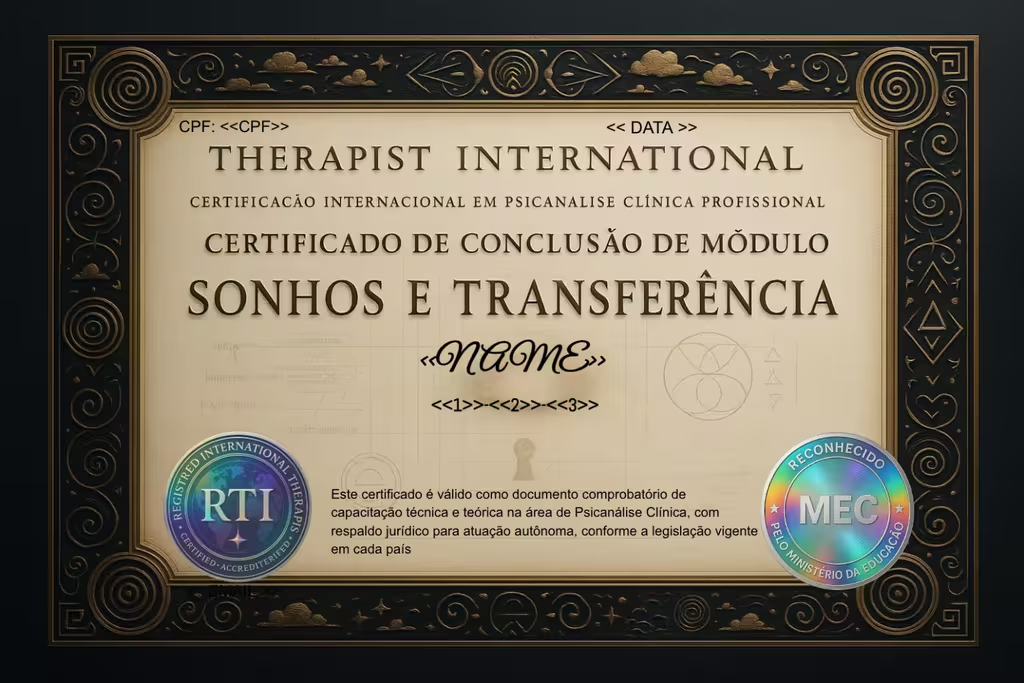
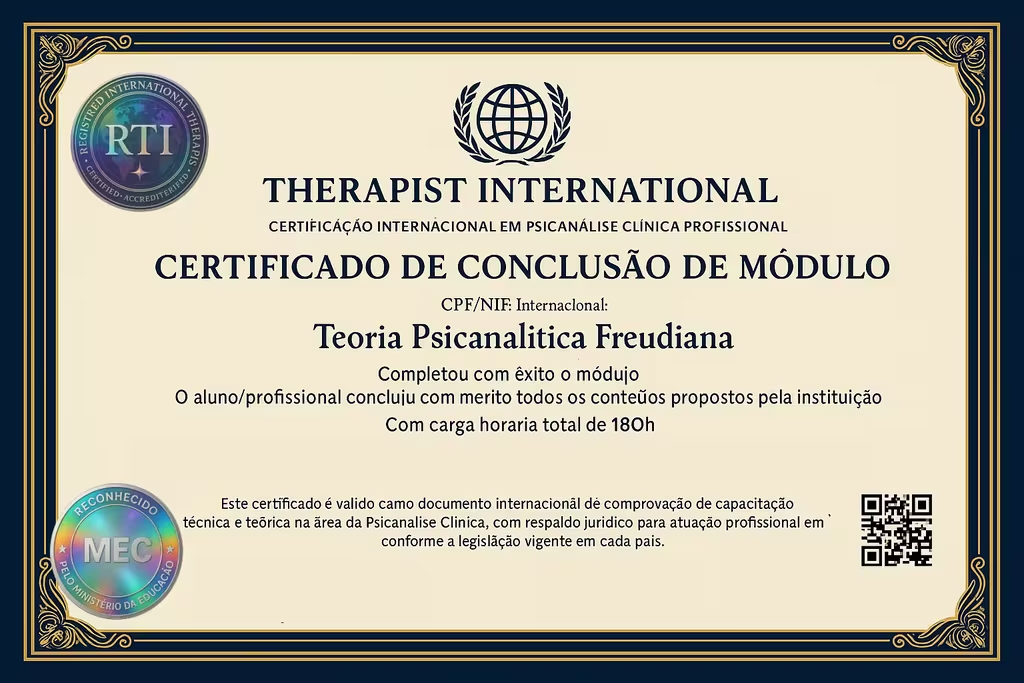
The Self-Knowledge Journey of the Psychoanalysis Course: Transforming Lives Through Freudian Theory
The Psychoanalysis Course represents a gateway to a fascinating universe of understanding the human mind. Developed by Sigmund Freud in the late 19th century, psychoanalysis revolutionized our perception of human behavior, laying the foundations for understanding how the unconscious influences our everyday actions.
Historical and theoretical foundations
When we talk about a Psychoanalysis Course, we are referring to an educational process that transcends the simple absorption of concepts. Training in psychoanalysis invites the student to dive deeply into Freudian and post-Freudian theories, understanding fundamental concepts such as the unconscious, defense mechanisms, transference and countertransference.
The theoretical development of psychoanalysis went through different historical moments. Initially centered on Freud’s theories, it expanded with contributions from thinkers such as Melanie Klein, Jacques Lacan, Donald Winnicott and many others. A comprehensive Psychoanalysis Course covers these different perspectives, preparing the student for a broad understanding of the field.
The Freudian revolution was not only theoretical but epistemological, creating a new paradigm for understanding psychic suffering. Unlike traditional medicine, which sought organic causes for symptoms, Freud proposed a different kind of listening, capable of deciphering the unconscious messages behind neurotic symptoms. A rigorous Psychoanalysis Course presents this historical rupture, situating the student within this revolutionary tradition that remains alive and vibrant.
The structure of a complete psychoanalysis course
A well-structured Psychoanalysis Course is usually divided into modules ranging from the historical foundations to contemporary practical applications. The first encounters with the theory often include the study of Freud’s fundamental works, such as “The Interpretation of Dreams” and “The Psychopathology of Everyday Life”.
As the student advances in the Psychoanalysis Course, they delve into more complex topics such as the structuring of the psychic apparatus, the stages of psychosexual development and the manifestations of the unconscious in culture. Alongside theory, practical training occupies a central place, including case studies, supervisions and, fundamentally, personal analysis.
Beyond the traditional curriculum, an innovative online Psychoanalysis Course incorporates discussions on contemporary neurosciences and their dialogue with psychoanalysis, questions of gender and sexuality from a psychoanalytic perspective, and psychoanalysis’ contributions to understanding emerging social phenomena, such as the impact of digital technologies on the constitution of subjectivity. This openness to contemporary issues demonstrates the vitality of a theory that, far from being frozen in time, continues to offer valuable tools for thinking through the challenges of the present.
The threefold psychoanalytic training
Training in psychoanalysis traditionally rests on what we call the “psychoanalytic tripod”: theoretical study, supervision and personal analysis. This triad constitutes the heart of any Psychoanalysis Course that aims to train professionals capable of practice.
Theoretical study provides the conceptual framework needed to understand psychic processes. Supervision offers the space to discuss the sessions conducted by the analyst in training, under the guidance of an experienced professional. Personal analysis, in turn, allows the future analyst to experience the psychoanalytic method firsthand, working through their own unconscious issues.
Personal analysis, often the most transformative aspect of a Psychoanalysis Course, is a unique experience that cannot be replaced by any kind of theoretical study. It is through it that the future analyst develops their capacity to listen, refines their sensitivity and becomes familiar with unconscious dynamics. As Freud used to say, the analyst can only lead their patient as far as their own analysis allowed them to go.
Contemporary applications of psychoanalysis
Although it emerged in a clinical context, psychoanalysis expanded into several fields of knowledge. A contemporary Psychoanalysis Course addresses these multiple applications, which include the analysis of social phenomena, cultural productions, institutions and group relations.
From literature to cinema, from education to politics, the conceptual tools of psychoanalysis allow innovative readings of the most diverse aspects of human experience. The student of a Psychoanalysis Course thus discovers that this approach offers much more than a therapeutic technique: it constitutes a true hermeneutics of culture.
In the digital age, psychoanalysis encounters new challenges and possibilities. An up-to-date Psychoanalysis Course addresses issues such as online sessions, the new symptoms related to digital technologies and the transformations in the forms of human bonding mediated by virtual platforms. These discussions highlight the capacity of psychoanalytic theory to reinvent itself in the face of new social scenarios, remaining a fundamental reference for understanding contemporary subjectivity.
Frequently asked questions about psychoanalytic training
Those seeking a Psychoanalysis Course often encounter fundamental questions. A common one concerns the duration of the training: there is no predetermined time, since the pace of each analyst in training is unique. Generally, a minimum period of four to five years is considered, but many psychoanalysts dedicate their entire lives to refining their training.
Another recurring question concerns the prior academic background required. Although psychoanalysis historically developed out of medicine and later psychology, today many institutions accept professionals from different fields of knowledge in their training programs, recognizing that psychoanalytic listening benefits from a diversity of knowledge.
The regulation of the profession is also questioned. Unlike professions such as psychology or medicine, psychoanalysis does not have a single state regulation, being governed by psychoanalytic associations and societies that establish their own training criteria and professional recognition. This particularity makes it even more important to carefully choose a Psychoanalysis Course that is recognized within the psychoanalytic field.
Choosing the right path
Choosing a suitable Psychoanalysis Course requires attention to some essential aspects. First, it is important to check the theoretical foundation of the course, making sure it covers the main currents of psychoanalytic thought. The qualification of the faculty also deserves special attention, prioritizing professionals with solid theoretical training and experience.
Another fundamental aspect is valuing personal analysis as an integral part of the training. A serious Psychoanalysis Course recognizes that it is not possible to become an analyst without going through the process of analysis, exploring one’s own unconscious and working through personal issues that could interfere with listening.
The course format – in-person, online or hybrid – should also be considered. Each modality has specific advantages and limitations. In-person courses favor more organic exchanges among participants, while online formats can offer greater flexibility and access to geographically distant faculty. A hybrid Psychoanalysis Course can represent an interesting balance, combining intensive in-person meetings with regular remote activities.
The challenges of analytic training
The path to becoming a psychoanalyst is not free of obstacles. One of the greatest challenges of a Psychoanalysis Course is the subjective transformation it provokes. Contact with the unconscious – both that of patients and one’s own – can awaken significant resistances and anxieties, requiring the analyst in training to be willing to review their own certainties and prejudices.
The development of “evenly suspended attention”, that peculiar listening that characterizes the psychoanalytic method, is also a challenge. Unlike the focused attention typical of other professional contexts, analytic listening requires an openness to the unexpected, capturing not only the manifest content of speech but also its subtext, slips and contradictions. A good Psychoanalysis Course offers practical exercises and supervisions that help develop this fundamental skill.
Professional prospects
Completing a Psychoanalysis Course opens up several professional possibilities. In addition to private practice, the psychoanalyst can work in mental health institutions, schools, companies and social organizations. Writing and research are also fertile fields, allowing contributions to the theoretical development of the discipline.
Regardless of the path chosen, psychoanalytic training represents a continuous process of learning and self-knowledge. The true psychoanalyst never considers their training complete, remaining constantly open to new knowledge and experiences that enrich their professional practice.
The Psychoanalysis Course transforms not only professional life but the very way of understanding the world and human relationships. By unveiling the mysteries of the unconscious, it offers a unique perspective on what it means to be human in all its complexity. As Freud said, psychoanalysis does not promise happiness, but rather the transformation of neurotic suffering into common unhappiness – and in that modest promise lies perhaps its greatest greatness.





 Google